As a science fiction writer and scholar, I’m acutely aware of genre. Almost everything I write fits into one or more of the genres that I enjoy reading. Speak Truth to Fire is a dark fantasy hardboiled detective novel, or dark fantasy noir if you allow the noir genre to be literary as well as cinematic. Star Pepper is a comedic space opera. For me, determining genre is often an early step in deciding how a book should be written: its characters, its setting, its style, and its overall tone all depend on the novel’s genre. It’s rare for me to start writing without first having a clear idea of a novel’s genre.
Starting from Somewhere Other Than Genre
The Argent Abyss series was a little different. I started from a different place. I had written a lot recently about my relationships with my parents. The short stories about my mom will probably never see the light of day–I rarely publish short stories. Star Pepper is explicitly about my relationship with my father. It’s a very different novel than I would write now, because my relationship with him is so different after caring for him during the last months of his struggle with parkinsonism. I don’t have any plans to write that novel, but, knowing my process, it wouldn’t surprise me if that surfaces in writing the next Cult of Mithras novel, which is at this point just a vague idea bubbling away in the back of my mind.
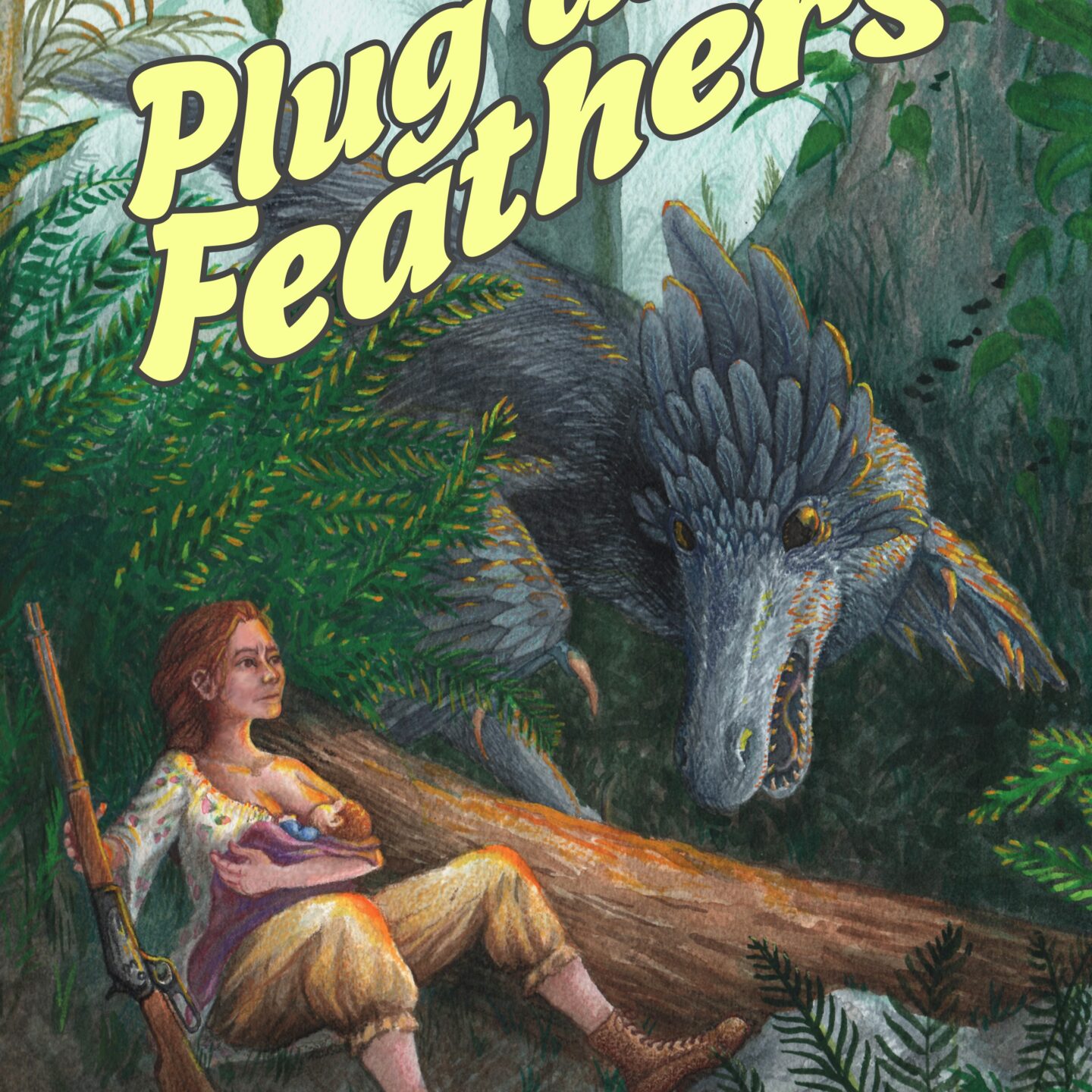
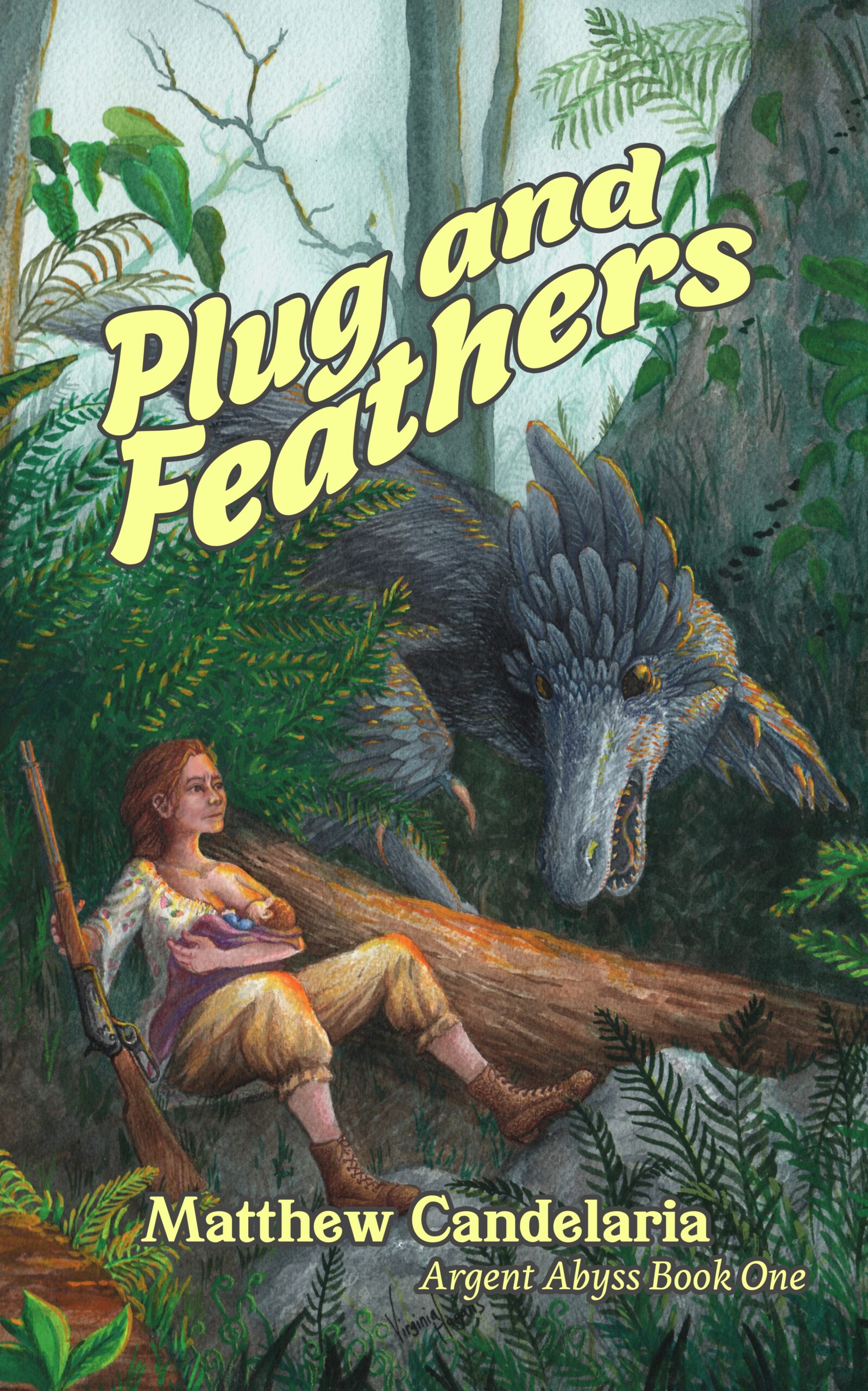
So when I started conceiving what would become Plug and Feathers, I didn’t start with a genre–I started out with the goal of writing something about being a parent. While I was doing some research for another project, I came across a story about how fluctuating silver prices in the 20s impacted people with small claims, and that’s where the silver mine idea came from. Then the idea of dinosaurs coming out of a portal occurred to me, and the entire thing fell together in about six frenzied weeks of writing. When I finished, the novel had everything I had hoped for: it had action, romance, and a unique, imaginative setting. The sparse prose not only makes it a rapid read, it also creates an existential alienation from the characters that was particularly important to me at the time. A fortuitous discovery while researching mining equipment even meant that it had a title I liked, something many of my novels don’t get until months or years after they’re finished–if ever.
It had everything, that is, except a genre.
What a Genre Does
But does it really need a genre? Why can’t it just be its own thing?
It can be its own thing until you want to describe it to someone, or–and this is where genre really matters–you want to sell it.
In the writing, editing, and critiquing process, I described Plug and Feathers as the “Dinosaurs kidnapped my baby!” book. I think this works pretty well as an elevator pitch. It’s evocative, intriguing, and accurate. I can tell in 15 seconds if someone is interested in this book.
When it came time to market the book, though, Amazon (shockingly) didn’t have “Dinosaurs kidnapped my baby” as an option for the genre. You can choose up to three categories. You used to be able to petition to be added to up to 10, but not anymore. Instead, as I found out, Amazon will arbitrarily assign you to whatever categories it wants. The options it had weren’t great for Plug and Feathers.
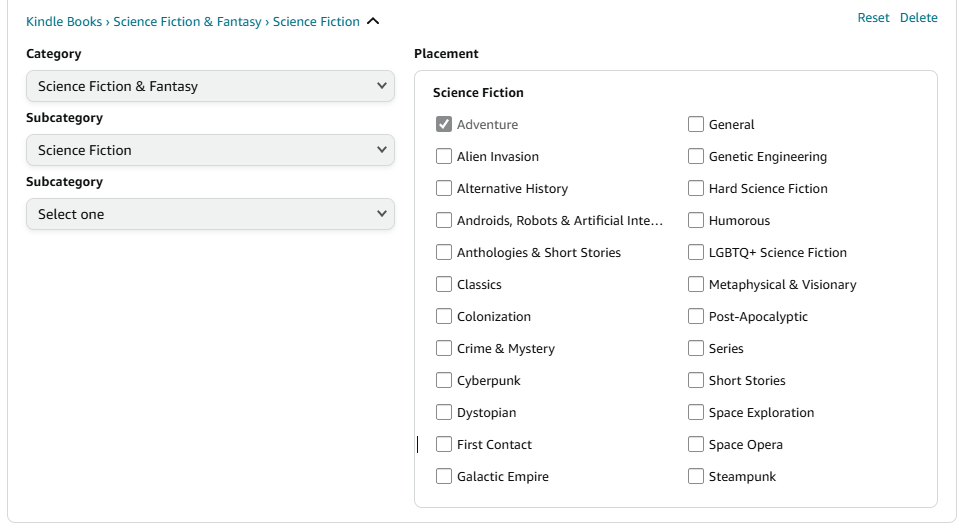
First, there’s the question of science fiction vs. fantasy. It isn’t clearly either. Although the portal mechanism by which the dinosaurs appear seems like fantasy, the creatures themselves and their world are built with close reference to scientific evidence. I even went to the trouble of researching paleontological evidence about the length of the days and months. Plus, science fiction readers are the ones most likely to be satisfied with things like the deep dive into separating pure silver from its ore that becomes central to the end of the book.
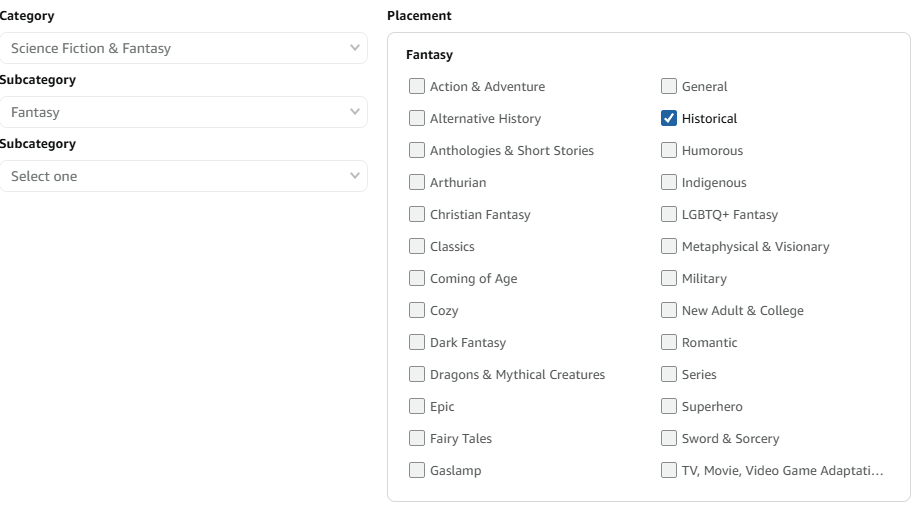
So I decided to split the difference, using genres from both science fiction and fantasy. Easy choices were “Science Fiction: Adventure” and “Fantasy: Action & Adventure.” Really, the novel is an adventure story. But what third category would I choose? I decided on “Fantasy: Dragons & Mythical Creatures,” thinking that my intelligent dinosaurs (especially the T. rexes) were inspired by dragons in books, movies, and RPGs.
Trouble with Amazon
Once Plug and Feathers launched, I noticed that Amazon had decided the one category it really belonged in was “Fantasy: Sword & Sorcery.” I was aghast: there is not a single sword in the entire series. Nobody looking for sword & sorcery would be happy with this novel, and anybody considering this novel might be turned off by the category.
So I got rid of the “dragons” category, and I wanted to select the third category from the science fiction side to get moved out of a fantasy category. I put it into “Alternative History,” because the third book leans into the intersection with history via immigration policy at the time, and any continuation of the story will focus on how dinosaurs might change specific historical events. This got me in trouble with Amazon. I got a nasty letter from Amazon.In (that’s in India) about how my novel didn’t meet their (apparently strict) criteria for “Alternative History,” and it wouldbe removed. I explained my rationale, but they weren’t convinced. They said that I should put it under “portal fantasy,” which made me think that was the perfect genre. Why didn’t I use that? Oh, yeah, because it’s not an option.
So, the three categories I use now are “Science Fiction: Adventure,” “Fantasy: Historical,” and “Science Fiction: Alien Invasion.” And the category Amazon settled on was: “Fantasy: LGBTQ+ Fantasy.” I don’t think that’s exactly right, but I’m not fighting it because queerness is absolutely central to the overarching narrative, and certain people who are looking for that might very well be satisfied, while anyone who is turned off by it being categorized as LGBTQ+ would not be happy with the novel, anyway.
Fortunately, my work in progress has a clear genre: Space Opera. But it’s also “First Contact,” “Galactic Empire,” and has strong “Hard Science Fiction” elements. I guess I’ll make that decision when I have a finished manuscript.